The Monuments of Omaha Beach
Omaha Beach keeps its record in the open. The monuments stand on the sand, on the sea wall, and on the German bunkers themselves, spread along roughly 8 km of shore between Vierville-sur-Mer and the Colleville draw, and every one of them is free to visit at any hour. The beach is a working public beach: children dig where the first wave landed, and the tide that decided so much on June 6, 1944 still empties the bay twice a day. They read best west to east, the same direction the battle is usually told. For the full account of the landing itself, read the Omaha Beach history guide.
The National Guard Monument at Vierville-sur-Mer
At the western end of the beach, the National Guard Monument stands directly on top of the German casemate designated WN72, the position whose gun swept the Vierville draw. This was Dog Green sector, where Company A of the 116th Infantry, 29th Division, lost most of its men in the first minutes, among them 19 soldiers from the single town of Bedford, Virginia. The monument honors the National Guard soldiers of both world wars, and the concrete it sits on still shows the emplacement it silenced. Stand at the rail and the field of fire explains the morning better than any text panel.
Les Braves at Saint-Laurent-sur-Mer
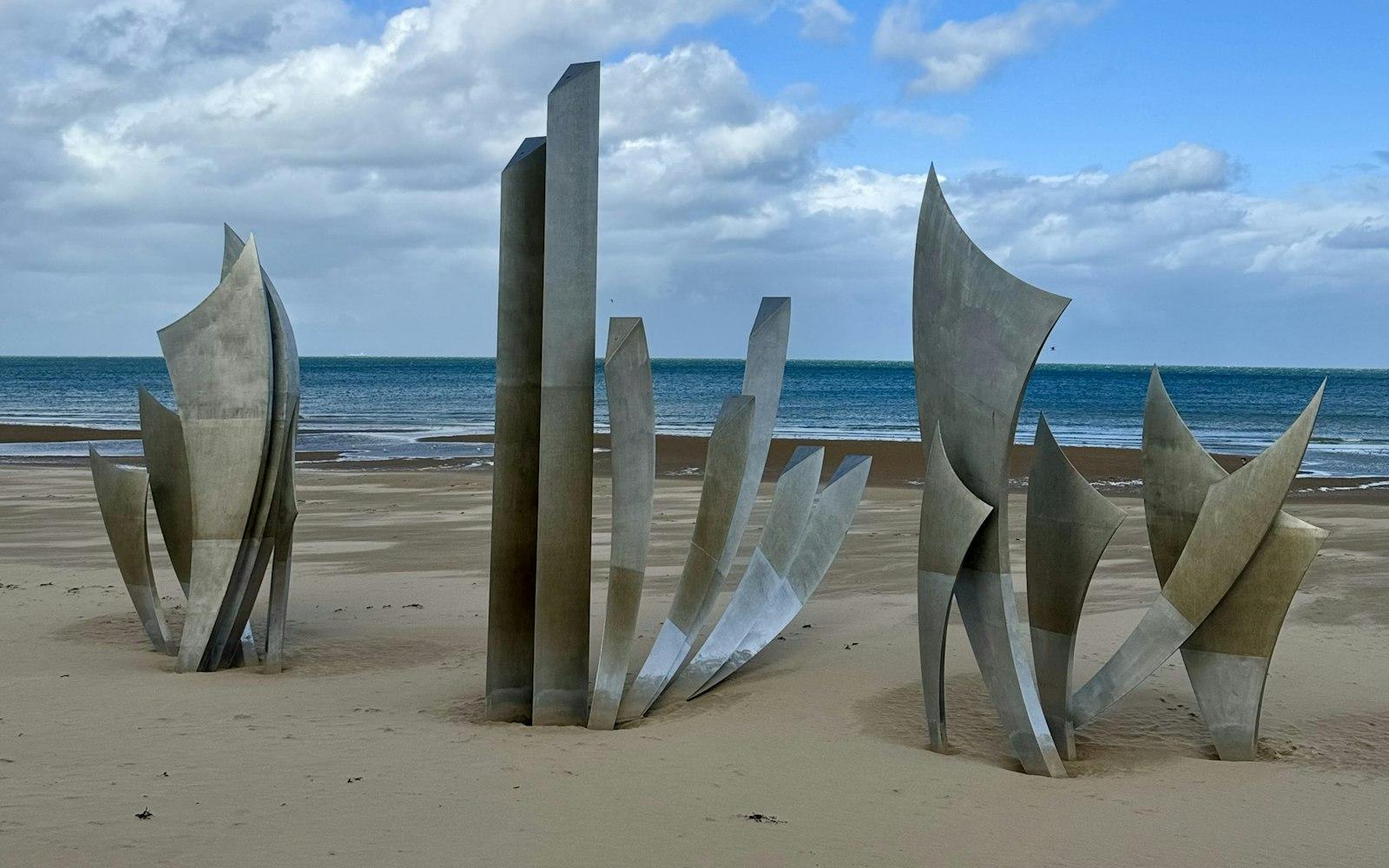
The steel sculpture in the middle of the beach at Saint-Laurent-sur-Mer is Les Braves, created by the French sculptor Anilore Banon and unveiled on June 6, 2004, for the 60th anniversary of the landings. It weighs about 15 tons, rises roughly 15 meters, and was built at the CMN shipyard in Cherbourg, where the shipwrights shaped its wings the way they shape hulls, to stand in moving water. Its three elements carry names: The Wings of Hope, Rise, Freedom!, and The Wings of Fraternity. Banon wrote that she made it to honor the sons, husbands, and fathers who risked and often gave their lives to free the French people. The sculpture stands in the tidal zone, so at high water the sea surrounds it. Behind it on the esplanade, the stone Signal Monument commemorates the landings, with dedications to the 1st Infantry Division and the 116th Regimental Combat Team.
WN62 and the 1st Infantry Division Monument
At the eastern end, above the Colleville draw, the German strongpoint WN62 survives as broken casemates on the bluff, just below the eastern edge of the Normandy American Cemetery. Its machine guns did more damage on Omaha than any other position. The 1st Infantry Division Monument, a granite obelisk carrying the names of the division’s dead, stands on the bluff at WN62, and the 5th Engineer Special Brigade memorial sits on one of the bunkers itself. The Americans built their monuments on the positions that killed their men, and walking the ground between them takes minutes.
Walking the Beach
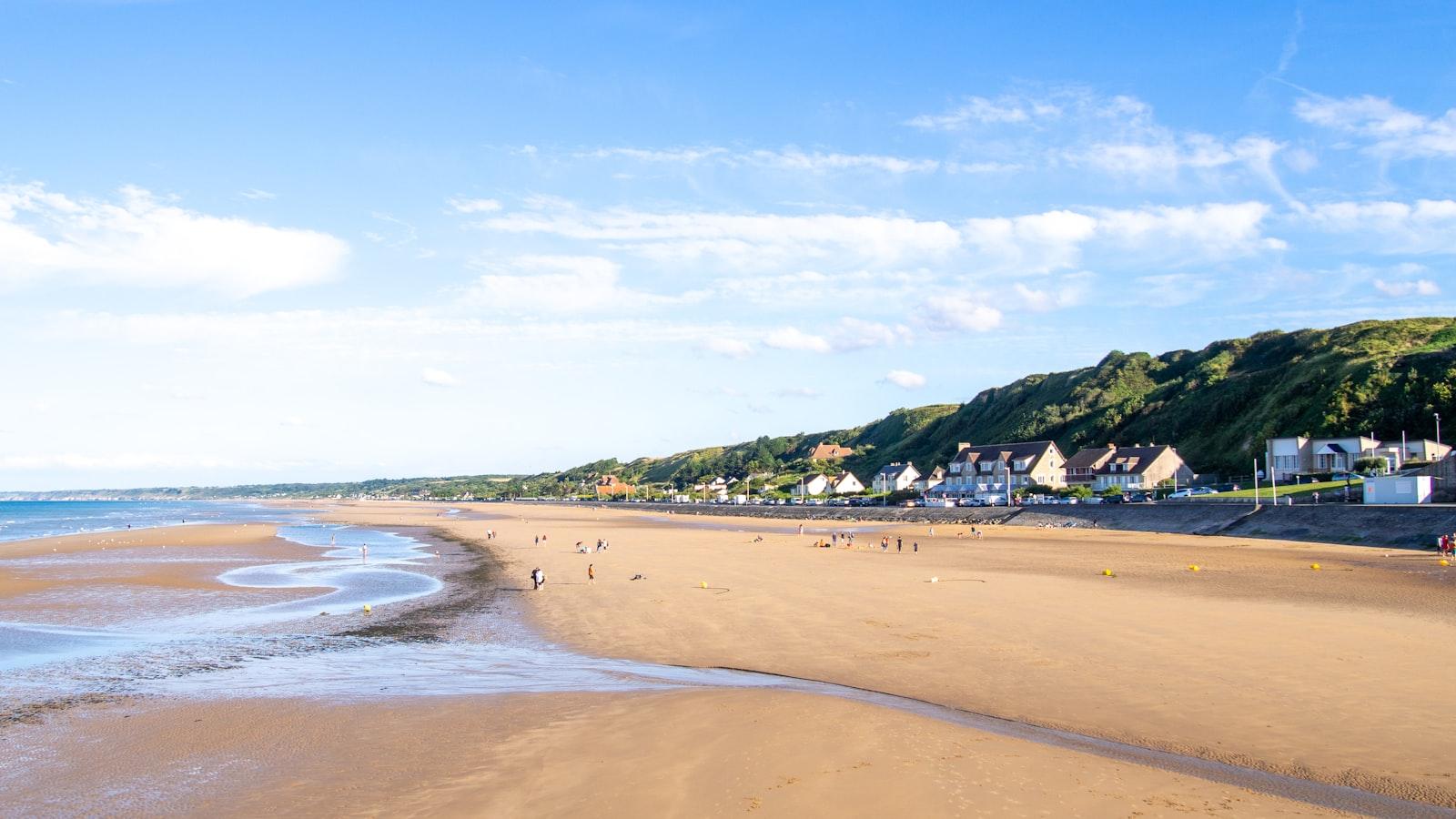
Walk the beach at low tide and the distances turn from numbers into effort: several hundred meters of flat, open sand separated the landing craft from the sea wall. The full crescent from Vierville to the Colleville draw takes about two hours on foot one way. Most visitors drive or ride between the three monument clusters instead, and each has its own access road down a draw the soldiers had to take under fire. Pointe du Hoc sits 15 minutes farther west by road.
From the Sand to the Cemetery
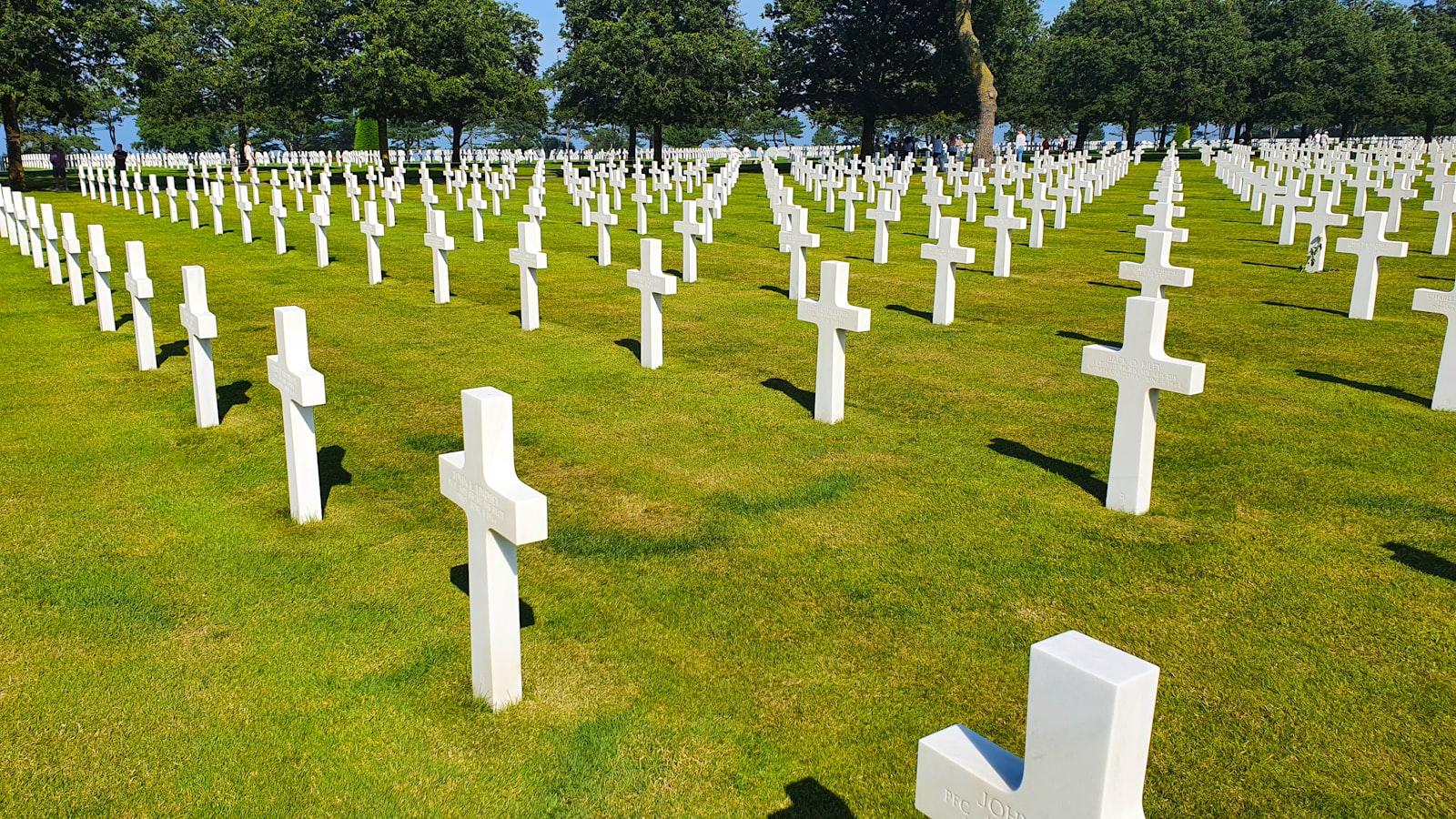
From the Les Braves esplanade, a footpath climbs from Saint-Laurent up to the Normandy American Cemetery, where 9,387 graves and the Walls of the Missing hold the cost of this beach and the campaign that followed. Time your walk so the cemetery comes last; the beach reads differently once you have seen it. Visitors without a car can reach the Saint-Laurent esplanade by public bus in summer, covered stop by stop in the D-Day beaches without a car guide. To walk these monuments in sequence with a licensed guide and the timing handled, the LinkParis.com private Normandy D-Day tour builds the day around them.
Frequently Asked Questions
Can you visit Omaha Beach itself?
Yes. Omaha is an open public beach, and every monument on it is free to visit at any hour, year-round. People swim and walk dogs on the same sand the first wave crossed.
What is the steel sculpture on Omaha Beach?
Les Braves, by the French sculptor Anilore Banon, unveiled on June 6, 2004, for the 60th anniversary of D-Day. It stands in the tidal zone at Saint-Laurent-sur-Mer, so the sea surrounds it at high water.
What do the three parts of Les Braves represent?
The Wings of Hope, Rise, Freedom!, and The Wings of Fraternity. Banon dedicated the work to the men who risked and often gave their lives in the hope of freeing the French people.
Are there still German bunkers at Omaha Beach?
Yes. The WN62 strongpoint survives on the bluff above the Colleville draw, with the 1st Infantry Division Monument beside it, and the National Guard Monument at Vierville stands directly on the WN72 casemate.
How do you reach the Omaha monuments without a car?
Take the train to Bayeux, then bus line 120 toward the American Cemetery, or the daily summer coastal line 125, which stops at Saint-Laurent-sur-Mer and the cemetery from July 5 to August 31, 2026.